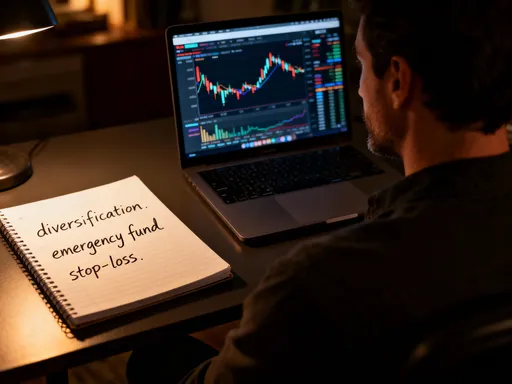
How I Built a Retirement Portfolio That Actually Works
Planning for retirement used to stress me out—so many choices, so much conflicting advice. I tried aggressive investing, then pulled back too hard, nearly missing key growth years. What finally clicked was a simple but powerful idea: smart asset allocation isn’t about picking winners, it’s about balancing risk and reward over time. This is the full story of how I built a retirement strategy that feels safe, grows steadily, and keeps me sleeping at night. It wasn’t built in a day, and it wasn’t perfect from the start. But by focusing on structure over speculation, consistency over cleverness, I created a plan that works not just for the markets, but for me—my temperament, my goals, and my peace of mind.
The Wake-Up Call: Realizing My Retirement Plan Was Broken
For years, I treated retirement planning like a distant chore—something to worry about “later.” I contributed just enough to my employer’s 401(k) to get the match, but beyond that, I wasn’t intentional. I assumed time was on my side, and that compound interest would magically carry me to financial freedom. Then, in my mid-40s, I sat down to run the numbers. How much would I actually need to maintain my lifestyle? I used a conservative estimate: replacing 70% of my pre-retirement income, adjusted for inflation, over a 30-year retirement. The result was sobering—over $1.8 million. At the time, I had less than half that, and my investments were scattered across a few mutual funds I’d picked based on past performance, not strategy.
Worse, my behavior was inconsistent. When the market surged, I felt bold and added more to stocks. When it dipped, I panicked and moved money into cash, locking in losses. I was doing exactly what most investors do—buying high and selling low. I wasn’t managing risk; I was reacting to fear. I realized then that saving more was only part of the solution. The real issue was structure. Without a clear framework for how my money should be allocated, I was vulnerable to emotion, market noise, and poor timing. That moment was my wake-up call. I needed a strategy that didn’t rely on guessing the market, but on disciplined, long-term principles.
What changed everything was shifting my mindset from chasing returns to managing risk. I stopped asking, “What’s performing best this year?” and started asking, “What mix of assets will help me reach my goals without keeping me up at night?” This subtle but powerful shift led me to the concept of strategic asset allocation—a methodical approach to dividing investments across different asset classes based on personal circumstances, not market trends.
What Asset Allocation Really Means (And Why It’s Not Just Diversification)
At first, I thought I was already diversified. I had stocks, bonds, and a small real estate investment trust (REIT) in my portfolio. But I soon learned that true asset allocation is more than just owning different things—it’s about intentional balance. Diversification spreads risk across securities, but asset allocation determines the overall risk level of your portfolio. It’s the blueprint, not just the building materials. I discovered that different asset classes—such as equities, fixed income, real estate, and commodities—behave differently under various economic conditions. Stocks tend to rise during growth periods but fall sharply in recessions. Bonds often stabilize portfolios during downturns. Real estate can hedge against inflation. Commodities may protect against currency devaluation.
The real power of asset allocation lies in combining these assets in a way that reduces volatility while still allowing for growth. Research from institutions like Vanguard and Fidelity has consistently shown that over 90% of a portfolio’s return variability comes from its asset mix, not individual stock picks or market timing. That was a revelation. It meant that my energy was better spent on getting the big picture right—my overall mix—rather than chasing the next hot stock or fund.
I also learned that asset allocation must be personal. A 60/40 stock-to-bond split might work for one person, but be too aggressive or too conservative for another. It depends on your time horizon, risk tolerance, and financial goals. I took a step back and evaluated my own situation. I was 15 years from retirement, had a stable income, and could tolerate moderate risk—but not extreme swings. I didn’t want to lose sleep over market drops. So I aimed for a balance that would grow my wealth over time without exposing me to unnecessary risk. This wasn’t about maximizing returns; it was about optimizing for sustainability and peace of mind.
Mapping Out My Time Horizon: From Now to Retirement and Beyond
One of the most important insights I gained was that asset allocation isn’t static—it should evolve as you move through life. I broke my financial journey into three distinct phases: accumulation, transition, and distribution. Each phase required a different approach. During the accumulation phase—my 30s and 40s—my focus was on growth. I had time to recover from market downturns, so I allocated about 75% of my portfolio to equities, including domestic and international index funds. The remaining 25% was in bonds and cash equivalents, providing some stability without sacrificing long-term potential.
As I entered my 50s, I shifted into the transition phase. Retirement was no longer abstract—it was on the horizon. Market drops now posed a greater threat because I had less time to recover. I began gradually reducing my equity exposure, moving from 75% to 60% over five years. I did this through regular contributions—directing new money into bonds rather than stocks—rather than selling existing holdings, which could trigger taxes. This slow, disciplined approach helped me avoid emotional decisions during volatile periods.
Now, in my early 60s, I’m entering the distribution phase. My focus has shifted from growth to income and capital preservation. My target allocation is now 50% equities, 40% bonds, and 10% in alternative assets like real estate and inflation-protected securities. I’ve also built a cash reserve equivalent to two years of living expenses, so I won’t need to sell investments during market downturns to cover bills. This phased strategy has given me confidence. I know my portfolio is designed not just for today, but for the next 30 years. It’s flexible enough to adapt, but structured enough to prevent impulsive changes.
Choosing the Right Mix: Balancing Stocks, Bonds, and Alternatives
Finding the right asset mix wasn’t a one-time decision—it was a process of testing, adjusting, and refining. I started with a traditional 60/40 portfolio, but found it too volatile for my comfort. During the 2020 market crash, my portfolio dropped nearly 20%, and I felt the urge to pull out. That told me I needed more stability. I experimented with different models, including target-date funds and robo-advisor portfolios, but ultimately built my own blend based on my risk profile and goals.
My core now consists of low-cost, broad-market index funds—specifically, a total U.S. stock market fund, a total international stock fund, and a total bond market fund. These provide instant diversification across thousands of securities, with minimal fees. I keep expense ratios below 0.10% to maximize net returns. For the equity portion, I tilted slightly toward value and small-cap stocks, which historical data suggests may offer higher long-term returns, though with added volatility. I accept that trade-off because I’ve structured the rest of my portfolio to absorb those swings.
To enhance resilience, I added a 10% allocation to alternative assets. This includes a REIT ETF for real estate exposure and a commodities fund focused on gold and energy. These don’t always move in sync with stocks and bonds, so they can act as a buffer during periods of high inflation or market stress. I also considered adding Treasury Inflation-Protected Securities (TIPS), which adjust principal based on inflation, and eventually included a small position in my bond allocation. The goal wasn’t to chase high returns from these alternatives, but to improve portfolio durability. Over time, this balanced mix has delivered more consistent results with less emotional strain.
Rebalancing Without the Stress: Making Adjustments That Stick
One of the biggest challenges I faced was staying disciplined when markets moved. Left to my instincts, I’d want to buy more stocks after a rally or flee to cash after a drop. That’s where rebalancing became essential. Rebalancing means periodically adjusting your portfolio back to your target allocation. For example, if stocks surge and now make up 70% of a portfolio instead of 60%, you sell some stocks and buy bonds to restore balance. This forces you to “sell high and buy low”—the opposite of emotional investing.
I used to avoid rebalancing because it felt risky or confusing. But I learned that not rebalancing is actually the riskier choice—it lets your portfolio drift toward higher risk over time. I set a simple rule: review my portfolio once a year, on the same date, regardless of market conditions. If any asset class is more than 5% above or below its target, I make adjustments. I do this through new contributions or withdrawals when possible, to minimize tax impact. If necessary, I sell small portions of overperforming assets and reinvest in underweight ones.
This routine removed the emotion from decision-making. I no longer had to guess when to buy or sell. The plan told me what to do. Over the past decade, rebalancing has modestly boosted my returns—by about 0.3% annually, according to backtesting—and significantly reduced volatility. More importantly, it gave me confidence that I was sticking to my strategy, even when the market was chaotic. It became a ritual of financial discipline, a small act of control in an unpredictable world.
Managing Risk: Protecting My Future from Hidden Threats
In the early days, I focused mostly on market risk—the chance of losing money in stocks. But I underestimated other, more insidious threats. Inflation, for example, quietly erodes purchasing power. A dollar today will buy only about 40 cents’ worth of goods in 30 years if inflation averages 3% annually. That means even a “safe” portfolio of cash and bonds could leave me poorer in real terms. I also didn’t account for healthcare costs, which can consume a significant portion of retirement income. A Fidelity estimate suggests a 65-year-old couple retiring today may need over $300,000 for medical expenses in retirement. That’s not including long-term care, which can cost tens of thousands per year.
Another hidden danger is sequence-of-returns risk—the risk that poor market performance early in retirement could permanently damage your portfolio. If you’re forced to withdraw from a declining portfolio, you lock in losses and reduce future growth potential. To protect against these threats, I built multiple layers of defense. First, I ensured my portfolio included growth assets—equities and real estate—that have historically outpaced inflation. Second, I created an emergency fund with two years of living expenses in liquid, low-volatility accounts. This allows me to skip withdrawals during market downturns.
I also developed a flexible withdrawal strategy. Instead of taking a fixed 4% every year, I use a guardrail approach—adjusting withdrawals based on portfolio performance. If the market is strong, I may take a little more; if it’s weak, I tighten my budget slightly. This adaptability helps preserve capital over the long term. Additionally, I delayed claiming Social Security until age 70 to maximize my benefit, which now acts as a reliable, inflation-adjusted income stream. These safeguards didn’t eliminate risk, but they made my plan more resilient to the unexpected.
The Long Game: Staying Consistent When Markets Wobble
The most difficult part of retirement planning isn’t the math—it’s the mindset. Markets will wobble. News will panic. Friends will brag about their latest gains. The temptation to abandon your plan is constant. I felt it during the 2020 crash, the 2022 bear market, and the inflation surge of 2023. Each time, my first instinct was to do something—anything—to feel in control. But I learned that the best move is often no move at all.
My asset allocation gave me the confidence to stay the course. Because I knew my portfolio was designed for the long term, I didn’t need to react to short-term noise. I reminded myself that volatility is not the same as risk. True risk is running out of money in retirement. Volatility is just the price of admission for higher returns. I also found comfort in history—every major market downturn has eventually recovered, and those who stayed invested were rewarded.
I stopped checking my account daily and limited reviews to quarterly or annually. I focused on what I could control: saving consistently, keeping costs low, rebalancing on schedule, and living within my means. Over time, I saw that patience and structure outperformed timing and guessing. My portfolio didn’t deliver the highest possible returns, but it delivered reliable, steady growth. More importantly, it allowed me to sleep at night. That, to me, is the ultimate measure of success.
Conclusion
Building a retirement portfolio isn’t about finding shortcuts or predicting markets. It’s about creating a thoughtful, adaptable framework that works through uncertainty. My asset allocation strategy didn’t guarantee perfection—but it gave me control, clarity, and peace of mind. I no longer fear market drops or obsess over quarterly statements. I trust the process. I know my money is working for me, not against me.
The journey taught me that successful retirement planning is less about intelligence and more about discipline. It’s about setting a course and sticking to it, even when the seas get rough. It’s about understanding your own limits and designing a plan that fits your life, not someone else’s. The numbers matter, but so does your emotional comfort. A strategy you can’t stick with is no strategy at all.
Today, I’m on track to retire with confidence. Not because I picked the best stocks or timed the market, but because I built a portfolio that balances growth and safety, structure and flexibility. It’s not flashy, but it’s solid. And in the end, that’s exactly what retirement planning should deliver—a future that’s not just financially secure, but emotionally peaceful.