How I Tamed the Chaos: Real Talk on Staying Safe While Growing My Money
I used to think investing was all about chasing big wins—until I got burned. Now I know the real game is playing it smart, not just bold. This is how I shifted from panic to confidence by focusing on what matters most: protecting what I’ve built while still aiming higher. No hype, no jargon—just real moves that actually work. It wasn’t a single market crash or a dramatic headline that changed my perspective. It was a slow realization, built over years of small oversights, emotional decisions, and moments of misplaced confidence. I learned the hard way that without a solid foundation of risk control, even the most promising gains can vanish in months. This journey isn’t about getting rich overnight. It’s about staying rich, staying safe, and building something that lasts.
The Wake-Up Call: When Risk Hit Home
My turning point didn’t come from a financial crisis or a global event. It came on a quiet Tuesday morning, sitting at my kitchen table, reviewing my portfolio after a routine check-in. I noticed something unsettling: the account that had grown steadily for three years had lost nearly 40% of its value in just six months. Not because of a market-wide downturn, but because I had concentrated too much in a single sector I believed was 'the future.' At the time, I was convinced I was being bold, forward-thinking. In reality, I was ignoring the most basic rule of long-term wealth: never risk more than you can afford to lose.
That moment wasn’t dramatic, but it was profound. I realized I had been measuring success only by gains, never by stability. I had celebrated every 10% rise but dismissed the possibility of a 30% drop. I had assumed that because the market had been kind in recent years, it would always be kind. But markets don’t care about assumptions. They respond to fundamentals, timing, and, often, human error. My error was treating risk as an abstract concept rather than a daily responsibility. I had focused so much on 'making money' that I forgot the first job of any investor is to 'not lose money.'
What made this wake-up call even more personal was the context of my life. I wasn’t a young professional with decades to recover. I was in my late 40s, raising two children, managing a household budget, and thinking seriously about retirement. That lost 40% wasn’t just a number on a screen. It represented years of careful saving, vacations deferred, and extra shifts taken. It was a reminder that financial decisions don’t happen in a vacuum. They affect real lives, real goals, and real peace of mind. From that day forward, I committed to a new approach: growth with guardrails. Not fear-based avoidance, but intelligent, consistent risk management woven into every financial choice.
Risk vs. Reward: Why the Old Trade-Off Is Backwards
Most people learn early that investing is a balance of risk and reward. The common wisdom says: want higher returns? Take on more risk. Want safety? Accept lower gains. This trade-off feels logical, even fair. But after years of experience, I’ve come to believe this model is flawed—not because it’s false, but because it’s incomplete. The truth is, the most successful long-term investors don’t just accept risk; they actively reduce it in ways that actually enhance returns over time. Avoiding big losses isn’t the opposite of growing wealth—it’s the fastest path to it.
Consider this: if you lose 50% of your portfolio, you need a 100% gain just to get back to where you started. That’s not a theoretical math problem; it’s a real-world trap. Many investors, after a major downturn, either give up or chase risky bets to 'make up for lost time,' often making things worse. But if you limit your downside, even modest gains compound more effectively. For example, a portfolio that grows 8% annually with no major losses will outperform one that swings between +20% and -15% over the same period, even though the latter has higher peak returns. Why? Because consistency protects capital, and protected capital compounds reliably.
This is where the traditional risk-reward model fails. It treats all risk the same, as if a 10% drop and a 10% gain are equal but opposite forces. They’re not. Losses hurt more psychologically and mathematically. That’s why the smartest investors focus first on what they can control: minimizing large drawdowns. This doesn’t mean hiding in cash or avoiding the market entirely. It means building a strategy where growth is sustainable because it’s built on a foundation of safety. It’s not about being afraid of risk. It’s about being smarter than risk. When you stop seeing protection as a cost and start seeing it as a tool, you unlock a more powerful way to grow wealth.
Building Your Financial Seatbelt: The Core Principles of Protection
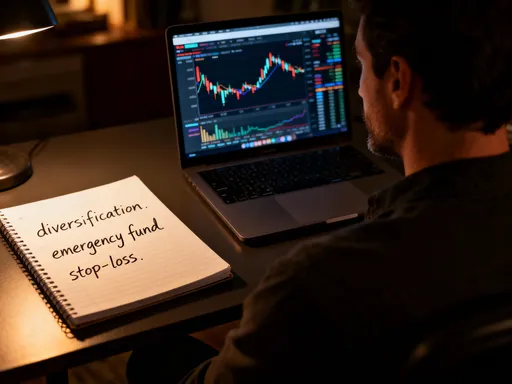
If investing is a journey, then risk control is your seatbelt. You don’t wear it because you expect a crash. You wear it because you value arriving safely. In finance, the equivalent of a seatbelt isn’t a single action but a set of daily habits and long-term principles. These aren’t flashy or exciting, but they are essential. Over time, I’ve built my own version of a financial safety system, one that doesn’t rely on perfect timing or insider knowledge, but on consistency and discipline.
The first principle is diversification, but not in the way most people think. It’s not just about owning multiple stocks or funds. True diversification means spreading risk across different types of assets—stocks, bonds, real estate, cash equivalents—and even across different economic environments. For example, when inflation rises, certain assets like Treasury Inflation-Protected Securities (TIPS) or commodities may hold value better than traditional stocks. Having exposure to these areas doesn’t guarantee profits, but it reduces the chance that your entire portfolio moves in lockstep with one market force.
The second principle is the emergency fund. This isn’t part of your investment portfolio; it’s the foundation that keeps you from dipping into it. I keep six months of living expenses in a high-yield savings account, separate from all other accounts. This buffer means I don’t have to sell investments at a loss if an unexpected bill comes up. It also reduces stress. Knowing I have liquidity available allows me to make long-term decisions without panic. Many people skip this step, thinking they’ll 'just sell something if needed.' But selling low is one of the most common ways people lock in losses. The emergency fund prevents that.
The third principle is emotional discipline. Markets move on news, but individual decisions are often driven by fear or greed. I’ve learned to pause before acting. If a headline makes me want to sell everything, I wait 48 hours. If a 'hot tip' makes me want to buy in fast, I do the same. This simple rule has saved me from multiple impulse decisions. Over time, I’ve built checklists for major financial moves, requiring me to answer specific questions before proceeding. These habits don’t make me a genius investor. They make me a safer one.
Diversification Done Right: Not Just Spreading Money Around
Let’s be honest: most people think they’re diversified when they’re not. Owning ten different mutual funds doesn’t mean you’re protected if they all hold the same types of stocks. True diversification isn’t about quantity; it’s about correlation. If all your investments rise and fall together, you don’t have a diversified portfolio—you have a concentrated one with extra paperwork. I learned this the hard way after investing heavily in technology-focused funds, assuming that different fund managers meant different risk. When the tech sector corrected, nearly all my holdings dropped at once. I hadn’t diversified; I’d just spread my bets across the same table.
Real diversification means owning assets that respond differently to the same economic events. For example, when interest rates rise, bonds often fall, but banks may benefit. When inflation climbs, stocks may struggle, but real estate or commodities might hold value. A well-diversified portfolio includes a mix of asset classes that don’t move in sync. This doesn’t eliminate risk, but it smooths out volatility. It turns wild swings into manageable fluctuations. I now structure my portfolio across four main categories: growth assets (like stocks), income assets (like dividend-paying funds), defensive assets (like bonds), and alternative assets (like real estate investment trusts or gold ETFs).
Another layer of smart diversification is time. I use dollar-cost averaging, investing a fixed amount each month regardless of market conditions. This means I buy more shares when prices are low and fewer when they’re high, which reduces the risk of entering the market at a peak. It’s not exciting, but it’s effective. I also diversify across income sources. Beyond my job, I’ve built side streams like rental income and dividend reinvestment. This means my financial health isn’t tied to a single paycheck or market movement. If one source slows, others can carry the load.
Finally, I review my diversification regularly—at least once a year. Markets shift, and what was balanced last year may be skewed today. Rebalancing isn’t about chasing performance; it’s about maintaining your original risk level. If one asset class has grown too large, I sell a portion and reinvest in underweight areas. This forces me to 'sell high and buy low,' which sounds simple but is hard to do emotionally. By making it a scheduled, rule-based task, I remove the emotion and stay on track.
The Hidden Traps: What No One Warns You About
Most financial advice focuses on external risks: market crashes, inflation, recessions. But the biggest dangers often come from within. I’ve found that the most damaging mistakes aren’t caused by bad data or poor timing. They’re caused by behavior. Overconfidence, lifestyle creep, and false security are silent threats that erode wealth slowly, often without warning. Recognizing them early is key to long-term success.
Overconfidence is especially dangerous after a period of success. When your portfolio grows, it’s easy to believe you’ve 'figured it out.' I once doubled down on a winning investment, convinced I had a special insight. The market shifted, and I lost much of what I’d gained. The lesson? Past performance is not a predictor of future results. Confidence is useful, but unchecked confidence leads to risk-taking without awareness. I now set personal limits on how much of my portfolio I can allocate to any single idea, no matter how sure I feel.
Lifestyle creep is another stealthy trap. As income rises, spending often follows, even if we don’t realize it. Upgraded cars, bigger homes, more dining out—these aren’t luxuries at first, but they become habits. The problem isn’t enjoying life; it’s failing to maintain the discipline that built the wealth in the first place. I track my spending carefully and revisit my budget every quarter. If I get a raise or a bonus, I decide in advance how much goes to spending and how much to saving or investing. This keeps growth in my net worth, not just my lifestyle.
False security is perhaps the most dangerous. It happens when we rely too much on a single source of stability—a stable job, a rising market, a trusted advisor. I once assumed my employer was 'too big to fail,' only to face restructuring years later. That experience taught me to never depend on one pillar. I now stress-test my financial plan: What if I lose my job? What if the market drops 30%? What if interest rates stay low for years? Running these scenarios helps me build backups before crisis hits. These aren’t pessimistic exercises; they’re practical preparations.
Tools That Actually Work: Simple Systems for Everyday Safety
You don’t need a Wall Street degree or expensive software to manage risk. What you need are simple, repeatable systems that work consistently. I’ve tested many tools over the years, and the ones that stuck are the ones that require little effort but deliver real protection. They’re not glamorous, but they’re effective.
One of my most useful tools is automatic rebalancing. Many brokerage platforms offer this feature, allowing me to set target allocations for each asset class. If one area grows too large, the system automatically sells a portion and buys more of the underweight assets. This keeps my risk level steady without me having to monitor daily prices. It’s like cruise control for my portfolio. I review the settings annually, but the system handles the rest. This removes emotion and ensures I’m not letting winners run too long or holding losers too tight.
Another tool is what I call 'stop-loss thinking,' even if I don’t use formal stop-loss orders. Instead of setting a rigid price trigger, I ask myself: At what point would this investment no longer make sense? For example, if a company I invested in changes its business model, loses key leadership, or shows declining fundamentals, I have a plan to exit. Writing this down in advance prevents me from holding on out of hope. It turns emotional decisions into logical ones.
Finally, I schedule quarterly financial check-ins. Just 60 minutes every three months to review my budget, portfolio, goals, and emergency fund. I use a simple checklist: Are my allocations on track? Has my income or expenses changed? Do I need to adjust my savings rate? This habit keeps me aware and in control. It’s not about constant tinkering; it’s about intentional oversight. Over time, these small, consistent actions compound into strong financial health, just like compound interest grows wealth.
Putting It All Together: My Real-World Risk Control Routine
So, how do I put all this into practice today? My routine isn’t complicated, but it’s consistent. Every January, I do a full financial review. I assess my goals, update my budget, and rebalance my portfolio. I check my emergency fund and make sure it still covers six months of expenses. I also review my insurance policies—health, home, life—to ensure I’m not underprotected. This annual reset gives me clarity and direction for the year ahead.
Throughout the year, I stick to my monthly and quarterly habits. Each month, I contribute to my investment accounts using dollar-cost averaging. I don’t try to time the market. I invest on the same day every month, like clockwork. Every quarter, I do my 60-minute check-in. I look at my portfolio performance, but not obsessively. I focus more on whether my strategy is still aligned with my goals, not whether I’m up or down in a given quarter.
When market swings happen, I stay calm. I remind myself that volatility is normal, not a crisis. I don’t check my accounts daily. I don’t read financial headlines with anxiety. I have a plan, and I trust it. If a major life change occurs—a new child, a job shift, a home purchase—I reassess my strategy, but I don’t panic. I adjust gradually, with clear reasoning.
This routine isn’t rigid. It’s flexible enough to adapt to life’s changes, but structured enough to prevent impulsive decisions. It’s not about perfection. It’s about progress, safety, and peace of mind. Over the past decade, this approach has helped me grow my wealth steadily, avoid major losses, and sleep well at night. That last part, by the way, is one of the best returns I’ve ever earned.
Final Thoughts: Winning Slowly Is Still Winning
In the end, financial success isn’t measured by how fast you get rich. It’s measured by how long you stay rich. I’ve learned that the most powerful moves in investing aren’t the bold, headline-making ones. They’re the quiet, consistent choices: saving regularly, avoiding big losses, staying diversified, and keeping emotions in check. These habits don’t make for exciting stories, but they build lasting security.
Protecting your money isn’t the opposite of growing it. It’s the foundation. Every dollar you don’t lose is a dollar that can keep working for you. Every smart decision you make today gives you more options tomorrow. The goal isn’t to outperform the market every year. It’s to stay in the game long enough to benefit from it over decades.
If there’s one thing I hope you take from this, it’s this: the smartest investors aren’t the ones taking the biggest risks. They’re the ones building systems that protect their progress while allowing steady growth. They understand that wealth isn’t created in a moment. It’s built over time, through discipline, patience, and a commitment to safety. And that kind of wealth? It doesn’t just change your bank account. It changes your life.