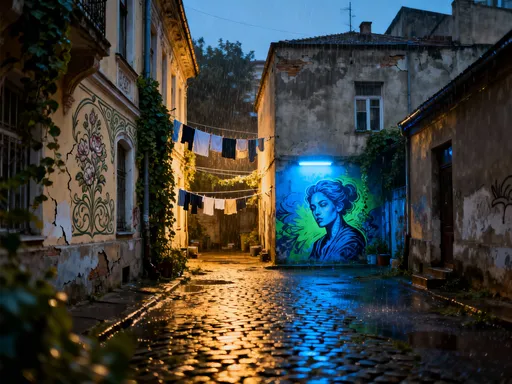
You Won’t Believe These Hidden Corners of Bucharest’s Cityscape
Bucharest isn’t just about grand boulevards and communist-era blocks—there’s a quieter, more soulful side hiding in plain sight. I wandered far from the tourist trails and found secret courtyards, forgotten art nooks, and rooftop views that stole my breath. This city pulses with raw charm, where old meets new in the most unexpected ways. If you're craving authentic urban beauty without the crowds, Bucharest’s offbeat cityscape might just surprise you. Beyond the postcard-perfect landmarks and bustling nightlife districts lies a different rhythm—one defined by weathered stone, ivy-clad walls, and the soft hum of everyday life unfolding behind unmarked doors. This is a city that rewards curiosity, where a single turn down an alley can reveal centuries of history, bursts of color, or moments of stillness amid the urban pulse. For travelers who seek connection over convenience, Bucharest’s hidden layers offer a deeply personal kind of discovery.
Beyond the Guidebooks: Redefining Bucharest’s Urban Soul
Bucharest is often introduced through its contradictions: a capital shaped by monarchy, war, communism, and rapid modernization, all layered into one sprawling, energetic city. Most guidebooks spotlight the Palace of the Parliament, the Village Museum, or the vibrant Lipscani nightlife zone. While these are undeniably part of the city’s identity, they only capture a fraction of its essence. The true soul of Bucharest reveals itself not in polished attractions, but in the quiet interstices—the alleyways behind historic facades, the courtyards tucked behind heavy wooden gates, the forgotten corners where graffiti artists leave their mark and neighbors share stories over morning coffee. These spaces are not designed for tourists, yet they offer a more intimate and honest encounter with the city.
Exploring Bucharest beyond the expected means embracing a slower, more observant way of moving through urban space. It requires letting go of rigid itineraries and allowing the city to guide you through subtle cues: a cracked doorway leading to a flower-filled courtyard, the sound of music drifting from an open window, or a hand-painted sign for a family-run bakery. This kind of travel is not about ticking off landmarks but about cultivating presence. It is in these unplanned moments that the city feels most alive, where architecture, memory, and daily life converge. The charm lies not in perfection, but in authenticity—the peeling paint on a 19th-century wall, the mismatched tiles on a stairwell, the way sunlight filters through laundry lines strung between buildings.
For women in their thirties to fifties—many of whom travel not just to see, but to feel and reflect—this quieter form of exploration can be deeply restorative. It offers a chance to step away from the noise and reconnect with a sense of wonder, not through spectacle, but through detail. Bucharest, in this light, becomes more than a destination; it becomes a companion in reflection, a city that invites you to look closely, to pause, and to appreciate the beauty of what has been lived in, used, and loved. This is urban travel at its most human scale, where every cracked step and hidden garden tells a story waiting to be noticed.
Lipscani’s Backstreets: Where History Hides in Plain Sight
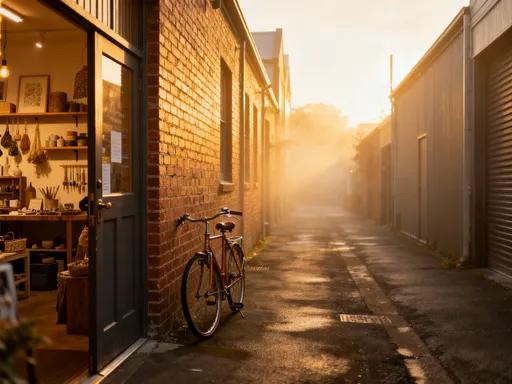
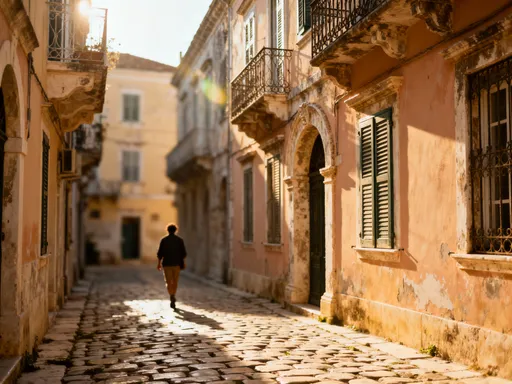
The Lipscani district is often celebrated as the historic heart of Bucharest, a place where cobblestone streets echo with the footsteps of merchants, revolutionaries, and revelers. By night, it transforms into a hub of bars and restaurants, drawing crowds with its lively energy. But by day, or just before the evening rush begins, a different side of Lipscani emerges—one that belongs more to memory than to merriment. Venture just a few steps off the main drag, and the noise fades. You enter a network of narrow lanes and forgotten passageways, where time seems to have paused, preserving fragments of the city’s layered past.
One such path is Strada Smârdan, a quiet street that runs parallel to the busier thoroughfares. Here, the architecture tells a story of resilience and change. Elegant 19th-century buildings with ornate stonework and wrought-iron balconies stand beside structures scarred by war and neglect. Some facades are crumbling, their upper floors long abandoned, yet traces of their former grandeur remain—carved floral motifs, arched windows, and faded frescoes peeking through layers of grime. These are not ruins in the traditional sense, but living remnants, buildings that have survived earthquakes, fires, and decades of political upheaval. They stand as silent witnesses to the city’s endurance.
What makes these backstreets truly special are the hidden courtyards that open up behind unassuming entrances. Step through a weathered door, and you might find yourself in a secluded world of ivy-covered walls, potted geraniums, and the soft clatter of dishes from a nearby kitchen window. These inner yards were once the heart of commercial and residential life in old Bucharest, serving as shared spaces for artisans, shopkeepers, and families. Today, they remain in use, though often in quieter ways—some host small workshops, others serve as private retreats for residents seeking a sliver of green amid the concrete. Exploring these spaces feels like stepping into a private archive, where every detail—from a rusted gate to a hand-painted number on a mailbox—carries meaning.
Walking through Lipscani’s hidden lanes is not about nostalgia, but about recognition. It is a reminder that cities are not static; they are made of layers, each one built upon the last, sometimes in harmony, sometimes in tension. To walk these streets is to engage with history not as a distant narrative, but as a lived reality, still unfolding. For the thoughtful traveler, these overlooked corners offer a deeper kind of connection—one that honors the past without romanticizing it, and appreciates the present for its complexity.
The Courtyard Culture: Bucharest’s Secret Green Oases
One of Bucharest’s most distinctive urban features is the *curte*—the inner courtyard nestled within the block-like apartment buildings that dominate much of the city. From the street, these structures often appear uniform and closed off, their entrances marked only by heavy doors or intercom systems. But behind them lies a different world, one of greenery, community, and quiet domesticity. These courtyards are not public parks or designed plazas; they are private, shared spaces, maintained by residents and shaped by generations of use. They represent a form of urban life that values privacy, simplicity, and a connection to nature, however small.
In neighborhoods like Iancu de Hunedoara, Mărăști, or around the Dristor area, many of these courtyards have been carefully tended over the years. Flower beds bloom with marigolds, roses, and herbs. Clotheslines stretch between buildings, swaying gently in the breeze. Children’s bicycles lean against walls, and elderly residents sit on wooden benches, reading newspapers or chatting in low voices. Some courtyards even feature small vegetable gardens, where tomatoes, cucumbers, and peppers grow in repurposed containers. These spaces are not manicured or Instagram-perfect; they are lived-in, functional, and deeply personal.
What makes the courtyard culture so special is its sense of continuity. Unlike the fast-paced redevelopment seen in other parts of the city, these spaces often remain unchanged for decades. The same families live in the same apartments, passing down keys and gardening tools from one generation to the next. There is a rhythm to life here—seasonal routines of planting, harvesting, and winter preparation—that stands in quiet contrast to the constant motion of the surrounding city. For visitors, glimpsing these courtyards—even from the threshold—offers a rare insight into the daily lives of Bucharest’s residents.
While these spaces are private and should be respected as such, their presence influences the character of the entire neighborhood. They create pockets of calm, where the noise of traffic fades and the air feels fresher. They also foster a sense of community, as neighbors interact during morning chores or evening walks. For women who value balance, nurturing, and a sense of rootedness, these courtyards may resonate deeply. They are not grand attractions, but they embody a quiet strength—a reminder that beauty and meaning can flourish in the most ordinary places, given time, care, and attention.
Street Art as Urban Poetry: Murals That Tell the City’s Story
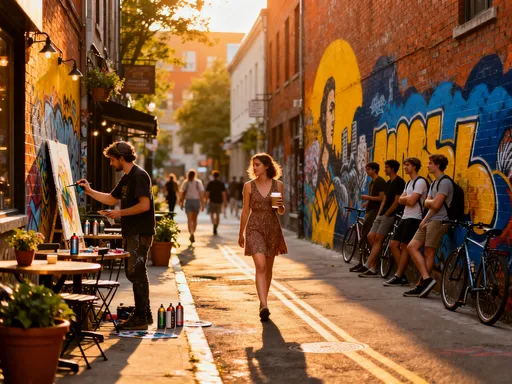
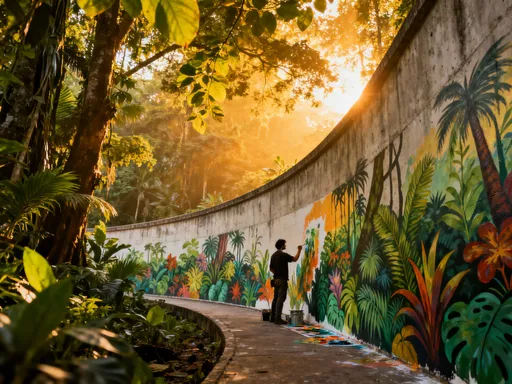
Across Bucharest, blank walls are coming alive with color, movement, and message. In districts like Pantelimon, Colentina, and parts of Rahova, street art has become a powerful form of expression, transforming neglected buildings into open-air galleries. Unlike the spontaneous graffiti that sometimes marks urban decay, much of Bucharest’s street art is intentional, collaborative, and deeply rooted in local identity. These murals are not just decorative; they are narratives in paint, telling stories of resilience, humor, social change, and cultural pride.
One striking example can be found in Pantelimon, where large-scale murals cover entire facades of apartment blocks. These works often feature bold portraits of everyday people—a grandmother in a headscarf, a child holding a book, a factory worker with tired eyes—elevating ordinary lives to the status of art. Other pieces incorporate symbolic elements: doves, keys, open books, or traditional Romanian patterns, weaving national heritage into contemporary visual language. The artists behind these works—many of whom are part of collectives like United Walls or Artizan—work with communities to ensure their murals reflect local values and histories.
What makes this street art particularly compelling is its accessibility. Unlike museum exhibitions or private galleries, these works are free to view, visible to anyone passing by. They democratize art, bringing beauty and meaning into neighborhoods that might otherwise be overlooked. For women who appreciate creativity and storytelling, these murals offer a powerful form of connection. They speak to shared human experiences—struggle, hope, memory, and joy—in a way that transcends language. A single mural can spark reflection, conversation, or even comfort, especially when it portrays themes of motherhood, family, or perseverance.
Walking through these neighborhoods with an eye for street art turns a simple stroll into a journey of discovery. Each mural invites you to pause, to look closely, to consider the story behind the image. Some are playful, others solemn, but all contribute to a larger dialogue about what Bucharest is and can be. In a city still healing from its past and shaping its future, street art serves as both mirror and compass—reflecting the present while pointing toward new possibilities.
Rooftop Reveries: Unofficial Vistas Above the Concrete
One of the most breathtaking ways to experience Bucharest is from above—not from a paid observation deck, but from an accidental vantage point. The city offers a surprising number of unofficial lookouts: the top floor of a parking garage, the terrace of a neighborhood cafe, the staircase landing of an old apartment building. These places are not listed in travel guides, yet they provide some of the most memorable views—panoramic, unfiltered, and free.
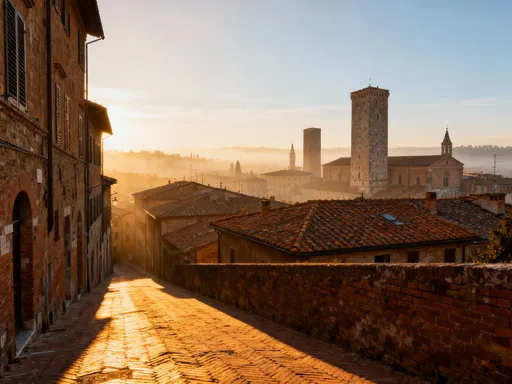
One such spot is the rooftop of a shopping center near Piața Sudului, where a quiet walkway on the upper level opens to a sweeping view of southern Bucharest. In the early morning or late afternoon, when the light is soft and the city hums at a lower pitch, the skyline takes on a golden hue. Church spires rise above the treetops, modern glass buildings glint in the distance, and the dense patchwork of rooftops stretches endlessly. From this height, the city feels both vast and intimate, a living organism made of countless small stories.
Another favorite is a small cafe in the Titan area, where a narrow staircase leads to a wooden terrace shaded by climbing vines. It’s not advertised, but regulars know to ask. Sitting here with a cup of herbal tea, watching the sunset paint the clouds in shades of rose and lavender, feels like a private gift. These rooftop moments are not about conquering heights or capturing the perfect photo—they are about stillness, perspective, and the quiet joy of seeing a familiar place in a new light.
Of course, accessing such spaces requires respect. These are not tourist attractions, and many are on private or semi-private property. The key is to observe quietly, move gently, and never trespass. When in doubt, ask permission or choose public alternatives. But for those who move with mindfulness, Bucharest rewards with unexpected vistas—places where the soul can breathe, and the heart can remember why travel matters.
Architectural Juxtapositions: Where Old Meets Boldly New
Bucharest’s skyline is a conversation between eras. In neighborhoods like Titan, Drumul Taberei, and parts of Berceni, you can see this dialogue play out in real time. A 1930s villa with Art Deco details might stand next to a sleek glass office building; a repurposed communist-era block now houses a micro-gallery or a co-working space for local designers. These contrasts are not always seamless, but they are honest—reflecting a city in motion, grappling with its past while reaching for the future.
One of the most inspiring trends is the adaptive reuse of older buildings. In some areas, ground-floor apartments in socialist-era blocks have been transformed into small creative studios, bookshops, or artisan cafes. These spaces are modest but full of character, often decorated with vintage furniture, handmade crafts, and walls lined with books or local art. They represent a grassroots form of urban renewal—one driven not by large developers, but by individuals who care about their neighborhoods and want to contribute meaningfully.
These architectural juxtapositions offer more than visual interest; they invite reflection. They ask us to consider what we preserve and what we change, how we honor history without being trapped by it, and how innovation can coexist with tradition. For women who have navigated their own life transitions—raising families, shifting careers, redefining identity—these spaces may feel especially resonant. They embody the idea that growth does not require erasure; that beauty can emerge from contrast, and strength from adaptation.
Walking through these evolving neighborhoods, one gains a deeper appreciation for Bucharest’s complexity. It is not a city frozen in time, nor one rushing blindly forward. It is a place learning to hold both—old and new, memory and possibility, structure and spontaneity. This balance, imperfect as it may be, is part of what makes the city so compelling.
Walking the Unmapped: A Mindset for Authentic Discovery
Ultimately, discovering Bucharest’s hidden corners is less about knowing where to go and more about how to be. It is not a checklist, but a state of mind—one defined by curiosity, patience, and respect. The most meaningful experiences often come not from planning, but from presence: noticing the way light falls on a cobblestone, hearing a neighbor’s laughter from an open window, or pausing to read a hand-painted sign in a quiet courtyard.
To walk the unmapped is to slow down. It means putting the phone away, stepping off the main streets, and allowing yourself to get slightly lost. It means engaging with the city not as a consumer, but as a witness. A polite smile to a local, a quiet nod when passing through a shared space, a moment of silence before photographing a mural—these small acts of mindfulness deepen the experience and honor the people who live there.
It also means embracing imperfection. Not every alley will lead to a revelation. Some courtyards will be closed, some walls blank, some views obstructed. But even these moments have value. They teach us to appreciate the ordinary, to find beauty in the in-between, and to travel with humility. For women who seek not just adventure, but meaning, this approach offers a richer, more lasting kind of fulfillment.
Bucharest, in all its layered complexity, rewards those who look closely. Its hidden corners are not just places on a map—they are invitations to see differently, to connect more deeply, and to carry a piece of the city’s quiet magic with you long after you’ve left. In a world that often feels rushed and curated, Bucharest’s offbeat cityscape reminds us that the most authentic discoveries are the ones we don’t plan for—they are the ones that find us, when we’re ready to notice.