You Won't Believe These Kinshasa Landmarks—But Watch Out for the Pitfalls
Kinshasa, the bustling heart of the Democratic Republic of Congo, is a city of raw energy and striking architecture. From colonial relics to modern monuments, its landmark buildings tell stories of resilience and identity. But behind the beauty lie real challenges—misinformation, access issues, and overlooked details that can trip up even savvy travelers. While the city’s skyline pulses with cultural significance, navigating its historic sites requires more than a camera and curiosity. This guide reveals what truly defines Kinshasa’s architectural soul, what to realistically expect, and how to explore with awareness. I’ll walk you through what’s truly worth seeing and what to avoid.
The Allure of Kinshasa’s Architectural Identity
Kinshasa’s cityscape is not merely a collection of buildings—it is a living archive of a nation’s journey through colonization, independence, and modernization. The architectural fabric of the city reflects layers of history, each era leaving behind physical imprints that continue to shape daily life. Colonial-era structures, often built with European symmetry and stone facades, stand in contrast to the bold, geometric government buildings that emerged after independence in 1960. These later designs were intended to symbolize sovereignty, ambition, and a break from the past. Today, a new wave of contemporary construction—modest yet innovative—adds further dimension to the city’s evolving skyline.
What makes Kinshasa’s architecture compelling is not just its visual diversity, but its role in expressing national identity. In a country with over 200 ethnic groups and a complex political history, public buildings serve as unifying symbols. The Palais du Peuple, for example, was constructed to house the national legislature and stands as a testament to self-governance. Its elevated dome and wide plazas were designed to inspire civic pride. Similarly, religious and cultural centers like the Cathédrale du Sacré-Cœur reflect both spiritual devotion and architectural ambition, blending local craftsmanship with imported styles.
Walking through neighborhoods like Gombe, Kinshasa Central, and Lingwala reveals how architecture shapes community life. Gombe, the administrative heart, is lined with wide boulevards and formal buildings that echo French urban planning. Yet even here, street vendors, musicians, and families transform the space into something distinctly Congolese. Buildings are not isolated monuments—they are backdrops to markets, political gatherings, and everyday interactions. This integration of function and form makes Kinshasa’s landmarks more than aesthetic attractions; they are active participants in the rhythm of urban existence.
For visitors, understanding this context enriches the experience. Rather than viewing structures as static relics, one begins to see them as dynamic elements in an ongoing national conversation. The peeling paint on a colonial façade speaks of economic hardship, while the careful restoration of a public theater hints at cultural revival. Architecture in Kinshasa is not about perfection—it is about persistence. It tells a story of a people who, despite challenges, continue to build, adapt, and assert their presence through the spaces they inhabit.
Iconic Structures That Define the Skyline
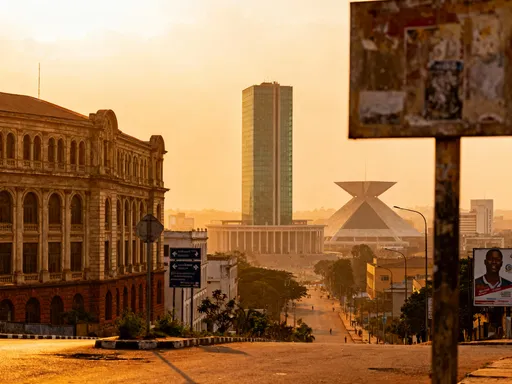
Among Kinshasa’s most recognizable landmarks is the Palais du Peuple, a monumental government complex that dominates the Gombe district. Completed in the 1970s with assistance from China, the building features a grand central dome flanked by symmetrical wings and expansive courtyards. Its design blends modernist influences with symbolic motifs, such as the raised roofline resembling a traditional chief’s hat—a nod to indigenous leadership. The interior houses parliamentary chambers and ceremonial halls, though public access is limited. Visitors can view the exterior from the surrounding plaza, where the scale and symmetry of the structure convey a sense of institutional strength.
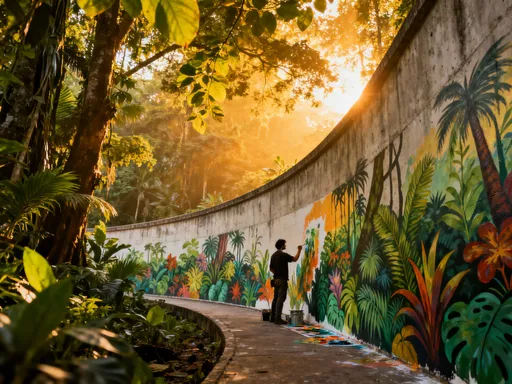
Another key site is the Académie des Beaux-Arts, a cultural institution that has nurtured generations of Congolese artists. Located in the Kinshasa Central area, the academy’s building combines functional design with artistic expression. Murals painted by students adorn the exterior walls, transforming the structure into a canvas of local creativity. Inside, studios and galleries host exhibitions that reflect both traditional techniques and contemporary themes. While not always open to casual tourists, scheduled visits or cultural events offer opportunities to engage with the vibrant arts community. The academy stands as a reminder that Kinshasa’s heritage is not only preserved in stone but also in the ongoing work of its people.
The Cathédrale du Sacré-Cœur, one of the city’s most prominent religious landmarks, rises above the skyline with its tall bell towers and arched entrance. Constructed during the colonial period, the cathedral blends Gothic Revival elements with tropical adaptations, such as wide eaves to manage rainfall. It remains an active place of worship, drawing large congregations every Sunday. Visitors are welcome to attend services or tour the interior during designated hours, though modest dress and quiet behavior are expected. The cathedral’s endurance through decades of social change makes it a powerful symbol of spiritual continuity in a rapidly transforming city.
Other notable structures include the Tour de l’Échangeur, a high-rise office tower near the Congo River, and the Monument à l’Indépendance, a sculptural tribute to national freedom. These sites, while less visited by international tourists, play important roles in civic life. The Monument, in particular, is a gathering place for national celebrations and public reflection. Its abstract design—three upward-reaching figures—represents unity, struggle, and hope. Together, these landmarks form a constellation of meaning, each contributing to Kinshasa’s identity as a city that honors its past while reaching toward the future.
The Hidden Challenges Behind the Facades
Despite their visual grandeur, many of Kinshasa’s landmarks present practical challenges that are rarely mentioned in travel blogs or guidebooks. One of the most common issues is the gap between online information and on-the-ground reality. Websites may list opening hours or visitor policies that are outdated or entirely inaccurate. A building advertised as open to the public might be closed for repairs, security reasons, or administrative functions with no advance notice. This lack of reliable information can lead to wasted time and frustration, especially for travelers on tight schedules.
Another frequent problem is inconsistent access. While some sites allow exterior viewing, entry into interior spaces often requires special permission or connections. For example, visiting the parliamentary chambers inside the Palais du Peuple is not a standard tourist activity and typically requires coordination through official channels. Even seemingly simple visits, such as touring the Académie des Beaux-Arts, may depend on the availability of staff or ongoing student activities. Without local guidance, visitors may find themselves turned away at the gate, unsure of why entry was denied.
Unofficial fees and informal demands also complicate the experience. Some travelers report being approached by individuals claiming to be guides or security personnel who request payments for access to areas that should be freely viewable. These situations can be confusing and uncomfortable, especially when it is unclear whether the person is authorized or acting independently. In some cases, small “donations” are requested to support building maintenance, blurring the line between extortion and community support.
Infrastructure limitations further impact accessibility. Poor signage, uneven sidewalks, and lack of visitor facilities make navigation difficult, particularly for those with mobility concerns. Public restrooms, drinking water, and shaded resting areas are often absent near landmark sites. Additionally, electrical outages can affect lighting and security systems, making evening visits impractical or unsafe. These conditions are not signs of neglect alone but reflect broader urban challenges that extend beyond tourism. Travelers who approach Kinshasa with flexibility and realistic expectations are better equipped to appreciate its landmarks without disappointment.
Navigating Security and Logistics Like a Local
Getting around Kinshasa safely and efficiently requires an understanding of the city’s unique transportation landscape. Public transit options, such as buses and shared taxis known locally as “taxi-bus” or “molende,” are affordable but often overcrowded and unreliable. Routes are not always clearly marked, and schedules can change without notice. For visitors unfamiliar with the city, relying solely on public transport to reach specific landmarks can be stressful and time-consuming.
A more practical option is to use private transportation. Many travelers hire local drivers for the day, either through hotels or trusted contacts. These drivers not only know the best routes but can also provide real-time updates on road conditions and traffic patterns. Alternatively, verified ride-hailing services have become increasingly available in Kinshasa, offering a safer and more predictable alternative to hailing taxis on the street. Using such services reduces the risk of overcharging or being taken on unnecessarily long routes.
Timing is another crucial factor. Kinshasa’s traffic congestion peaks during morning and evening rush hours, making midday visits to landmarks more efficient. Additionally, it is advisable to avoid areas near government buildings during weekdays when official activities are most active. While this is not due to political unrest, increased security presence and restricted access during such times can limit movement. Planning visits for weekends or early mornings often results in smoother access and fewer crowds.
Local guides can be invaluable allies in navigating both logistics and cultural nuances. A knowledgeable guide can facilitate entry to semi-restricted sites, explain historical context, and help communicate with officials or staff. They also serve as cultural interpreters, ensuring that visitors behave respectfully and avoid unintentional offenses. Choosing a guide affiliated with a recognized cultural organization or tourism initiative increases the likelihood of a trustworthy and enriching experience. Ultimately, moving through Kinshasa with local insight transforms what could be a frustrating journey into a meaningful exploration.
When Landmarks Become Tourist Traps
As Kinshasa gains visibility on the global travel map, some of its landmarks face the risk of commercialization that can dilute their authenticity. While tourism brings economic benefits, poorly managed visitor experiences can turn sacred or historically significant sites into superficial attractions. One common issue is the proliferation of informal vendors and photo operators near monuments. At the Monument à l’Indépendance, for instance, visitors may be immediately approached by individuals offering to take pictures for a fee or sell souvenirs. While some of these entrepreneurs are part of the local economy, their presence can overwhelm the solemnity of the space.
Another concern is the staging of cultural performances solely for tourist consumption. In some cases, traditional dances or ceremonies are shortened, exaggerated, or performed out of context to entertain visitors. These staged experiences, while visually engaging, often fail to convey the true meaning behind the rituals. They risk reducing rich cultural expressions to mere spectacles, stripping them of their spiritual and communal significance. Travelers seeking genuine connection may leave feeling misled, having witnessed a performance designed for cameras rather than community.
The balance between preservation and profit remains delicate. Some sites lack formal management structures, leading to inconsistent standards for visitor conduct and site upkeep. Without clear guidelines, commercial activities can encroach on protected areas, affecting both the environment and the visitor experience. For example, loud music, unregulated stalls, or unauthorized construction near historic buildings can detract from their dignity and historical value.
To avoid contributing to these issues, travelers are encouraged to seek out authentic, community-led initiatives. Visiting artist cooperatives near the Académie des Beaux-Arts, attending local church services at the Cathédrale du Sacré-Cœur, or participating in cultural workshops offers deeper engagement than passive sightseeing. Choosing off-peak hours not only reduces crowding but also allows for quieter reflection. Responsible tourism means recognizing that landmarks are not just backdrops for photos—they are living spaces embedded in the daily lives of Kinshasa’s residents.
Photography and Etiquette: What Tourists Often Get Wrong
Photography is one of the most common yet misunderstood aspects of visiting Kinshasa’s landmarks. Many travelers assume that public spaces are free to photograph, but certain restrictions exist for security and cultural reasons. Military installations, government offices, and police checkpoints—often located near major monuments—are strictly off-limits for photography. Attempting to take pictures of these areas, even unintentionally, can lead to questioning or confiscation of equipment. It is essential to observe signage and follow the lead of local behavior; if others are not photographing a site, it is best to refrain.
Even at non-sensitive locations, etiquette matters. Capturing images of people, especially in religious or ceremonial settings, should always be done with permission. At the Cathédrale du Sacré-Cœur, for example, photographing worshippers during services is considered disrespectful unless explicitly allowed by church authorities. Similarly, taking pictures of street vendors or children without consent can feel invasive, regardless of good intentions. A simple gesture or verbal request goes a long way in building trust and showing respect.
Another overlooked aspect is the use of drones. While drone photography offers stunning aerial views, it is heavily regulated in Kinshasa and generally prohibited near government and religious sites. Unauthorized drone use can result in confiscation or legal consequences. Travelers interested in aerial imagery should consult local authorities or licensed operators before attempting any flights.
Respectful behavior extends beyond photography. Speaking quietly in sacred spaces, dressing modestly when visiting religious sites, and refraining from touching historical artifacts are small but meaningful practices. These actions demonstrate awareness and appreciation, fostering positive interactions with locals. When travelers observe local norms, they are more likely to be welcomed and even invited into deeper experiences. Etiquette is not about restriction—it is about connection. By approaching Kinshasa’s landmarks with humility and care, visitors become part of a mutual exchange rather than passive observers.
Rethinking the Traveler’s Role in Urban Heritage
Tourism in Kinshasa is not just about seeing landmarks—it is an opportunity to contribute to their preservation and the well-being of the communities that sustain them. Every visit carries impact, whether through economic support, cultural exchange, or environmental awareness. Travelers who engage responsibly help ensure that Kinshasa’s architectural treasures remain meaningful for future generations. This begins with conscious choices: purchasing crafts directly from artists, dining at locally owned restaurants near historic districts, and hiring guides from community-based tourism initiatives.
Supporting local economies strengthens the connection between heritage and livelihood. When visitors buy a painting from an artist near the Académie des Beaux-Arts or attend a performance at a neighborhood cultural center, they help sustain the creative forces that give the city its soul. These actions go beyond charity—they affirm the value of local knowledge and expression. They also shift the tourism model from extraction to collaboration, where visitors are not just consumers but participants in a shared cultural journey.
Simple gestures, such as learning a few phrases in Lingala or French, can also deepen relationships. Greetings like “Mbote” (hello) or “Mboté na yo” (hello to you) are warmly received and open doors to more authentic interactions. Showing interest in local perspectives—asking about the history of a building from a resident rather than relying solely on guidebooks—adds layers of understanding that no brochure can provide.
Ultimately, Kinshasa’s landmarks are not frozen in time. They are evolving spaces shaped by the people who live, work, and worship within them. A responsible traveler recognizes this dynamism and approaches each site with humility, curiosity, and respect. By doing so, they become part of a larger story—one of resilience, creativity, and shared humanity. The true wonder of Kinshasa is not just in its buildings, but in the life that flows through them. And that is a journey worth taking, with eyes wide open and heart prepared to listen.