You Won’t Believe What I Saw in Cappadocia’s Sky
Have you ever imagined floating above a land that looks like it’s from another planet? That’s exactly what happened when I stepped into Göreme, Turkey. The surreal rock formations, ancient caves, and sunrise hot air balloons turned this quiet town into a living dream. I came for the views but stayed for the soul-soothing magic of the landscape. This isn’t just travel—it’s transformation. Let me take you through the wild beauty that left me speechless.
First Glimpse: Arriving in a Fairytale
The first time you see Göreme, it feels as though the earth has been sculpted by imagination rather than nature. As the minibus winds through the final stretch of road into the village, the landscape shifts abruptly from rolling Anatolian plains to a dreamscape of towering rock spires and undulating valleys. These are the famous fairy chimneys—cone-shaped pillars formed over millions of years from layers of volcanic ash, lava, and tuff, gradually eroded by wind and water into fantastical shapes. Some resemble mushrooms with wide stone caps balanced on slender stems; others stand like ancient sentinels guarding forgotten secrets.
The geology of Cappadocia is nothing short of extraordinary. Around 60 million years ago, massive volcanic eruptions blanketed the region with thick deposits of ash and lava. Over time, these deposits solidified into soft rock known as tuff, which is easily carved yet durable enough to withstand centuries of exposure. Harder basalt layers settled atop some formations, protecting the softer rock beneath and creating the distinctive chimney-like structures seen today. This rare combination of volcanic activity and erosion has produced a terrain found almost nowhere else on Earth.
Arriving in late afternoon, I watched as the setting sun bathed the valley in warm golden light, deepening shadows between the spires and igniting the rocks in hues of rose, amber, and rust. The air was crisp and still, carrying only the distant call of a shepherd’s flute and the soft crunch of gravel underfoot. There was a profound silence here—not empty, but full of presence. It wasn’t just the visual impact that struck me, but the sense of time suspended, as if this place existed outside the rush of modern life. Every step forward felt like stepping deeper into a forgotten chapter of the world’s story.
Why Göreme Stands Out Among Natural Wonders
While natural wonders abound across the globe, few blend geological marvel with human history as seamlessly as Göreme. Unlike the layered rainbow cliffs of Zhangye Danxia in China or the red sandstone mesas of Monument Valley in the United States, Cappadocia’s landscape tells a dual story—one of Earth’s forces and humanity’s quiet resilience. The region isn’t just shaped by nature; it has been shaped by people who carved homes, churches, and entire underground cities into the soft rock, turning geology into shelter, sanctuary, and society.
What makes Göreme truly unique is this enduring relationship between rock and residence. For over two thousand years, communities have lived within the very fabric of the land. Early Christians fleeing persecution in the 4th century sought refuge here, carving intricate churches adorned with frescoes into cliff faces. These hidden sanctuaries, now part of the Göreme Open-Air Museum, reveal delicate biblical scenes painted in faded ochre, red, and black—artistry preserved by the stable temperatures of the stone. Even earlier, Bronze Age Hittites are believed to have used natural caves for shelter, beginning a tradition of subterranean living that would evolve over centuries.
The integration of human life into the terrain wasn’t merely survival—it was symbiosis. The same soft tuff that allowed for easy carving also provided excellent insulation, keeping interiors cool in summer and warm in winter. Underground cities like Derinkuyu and Kaymaklı, some extending eight levels deep, housed thousands with ventilation shafts, wine cellars, stables, and communal rooms. These were not temporary hideouts but fully functional settlements, a testament to ingenuity and adaptation. Today, visitors can walk through these spaces and feel the echo of lives once lived in quiet harmony with the earth.
This deep connection between people and place elevates Cappadocia beyond spectacle. It’s not just a place to photograph; it’s a place to contemplate. Where else can you stand inside a 1,000-year-old chapel carved from a single rock formation, sunlight filtering through a hand-cut window, and feel the presence of those who came before? The land didn’t just shelter them—it shaped their faith, their art, their daily rhythms. In Göreme, nature isn’t a backdrop. It’s the foundation.
Sunrise Over the Balloon Sea: A Moment That Defies Reality
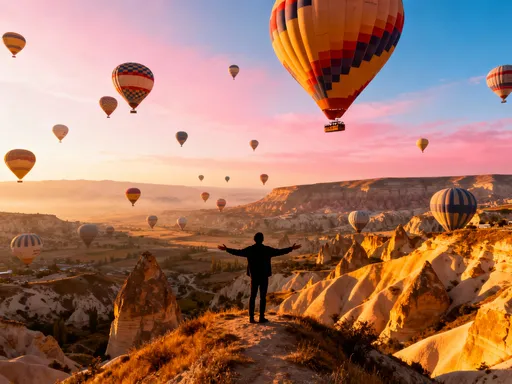
At 5:30 a.m., the valley is still wrapped in darkness when the first glow of lanterns appears. Small groups gather at launch sites scattered across Göreme, wrapped in jackets and sipping steaming tea as crews unpack massive nylon envelopes and inflate them with bursts of roaring flame. The air hums with anticipation. Then, as the eastern sky begins to blush with color, dozens of hot air balloons lift off in succession, rising like embers carried upward by an unseen wind. Within minutes, the sky is alive with color—crimson, cobalt, saffron, and gold—floating silently above the fairy chimneys in what can only be described as a waking dream.
The hot air balloon ride over Cappadocia is more than a tourist attraction; it’s a ritual. The experience begins long before takeoff, with a quiet communion among travelers and pilots in the predawn chill. As the balloon ascends, the world shrinks beneath you. Valleys unfold like folded fabric, their contours softened by morning mist. The patchwork of rock formations—pillars, cones, ridges—reveals patterns invisible from the ground. You float not above the landscape, but within it, suspended between earth and sky in a moment of perfect stillness.
What makes this experience so powerful is its sensory completeness. There is no engine noise, only the occasional flare of the burner breaking the silence. The basket sways gently, and the air grows warmer as the sun climbs. Below, the first rays catch the tips of the fairy chimneys, setting them alight one by one. In the distance, other balloons drift like jellyfish through a lavender sea. It’s easy to forget time, easy to forget self. This is not passive viewing; it’s immersion.
Safety and regulation are taken seriously in Cappadocia. The Civil Aviation Authority limits the number of daily flights and requires all operators to meet strict maintenance and pilot certification standards. Balloons follow designated flight paths to minimize environmental impact and avoid disturbing wildlife or residential areas. While the sight of hundreds of balloons filling the sky may seem overwhelming, the system ensures that the experience remains both magical and responsible. For many, this sunrise flight becomes the defining memory of their journey—not because it’s thrilling, but because it’s transcendent.
Hiking the Hidden Valleys: Rose, Love, and Pigeon Trails
Beneath the spectacle of the skies, Cappadocia’s true character reveals itself on foot. The region is laced with hiking trails that wind through narrow gorges, open valleys, and ancient pathways once used by monks and shepherds. Among the most beloved are Rose Valley, Love Valley, and Pigeon Valley—each offering a distinct blend of natural beauty, historical detail, and peaceful solitude. Walking these trails is not just exercise; it’s a slow revelation of the land’s many layers.
Rose Valley, named for the pinkish hue its rocks take on at sunset, is a gentle yet dramatic trail that cuts through a narrow canyon flanked by towering spires. The path is well-marked and mostly flat, making it accessible to hikers of all levels. As you walk, the walls close in, creating intimate passages where sunlight filters through high crevices. Scattered along the route are carved alcoves and burial niches—remnants of early Christian communities who used these secluded spaces for meditation and rest. Wild thyme grows in cracks, releasing its scent when brushed against, and lizards dart across sun-warmed stones. In spring, the valley blooms with wildflowers, adding splashes of violet and yellow to the stone palette.
Love Valley, despite its playful name, offers one of the most geologically fascinating walks in the region. The trail runs alongside a ridge of phallic-shaped rock formations—naturally eroded spires that have earned the area its nickname. While the shapes invite humor, the real wonder lies in the precision of erosion, where softer layers have worn away beneath harder caps, leaving tall, slender pillars standing in rows. The trail is slightly longer than Rose Valley and includes a few steeper sections, but the panoramic views from the top are worth the effort. It’s also a prime spot for photography at midday when the sun casts sharp shadows that accentuate the textures of the rock.
Pigeon Valley, stretching between Göreme and Uçhisar, is named for the countless dovecotes carved into its cliffs. For centuries, local farmers relied on pigeons for fertilizer, essential for cultivating the region’s vineyards and orchards. The hand-chiseled niches—some numbering in the hundreds on a single cliff face—were designed to attract birds and collect their droppings, a sustainable agricultural practice that speaks to the ingenuity of past communities. The trail here is wider and more open, offering sweeping views of the surrounding plateau. Hiking at sunrise or late afternoon avoids the midday heat and provides the best light for capturing the valley’s depth and scale. Comfortable shoes, a hat, and at least one liter of water are essential, as shade is limited. Staying on marked paths protects both hikers and the fragile landscape.
Staying in a Cave: Where Nature Meets Comfort
One of the most memorable aspects of a visit to Göreme is sleeping within the earth itself. Cave hotels, carved directly into the soft tuff, offer a unique blend of history and modern comfort. These accommodations range from simple guesthouses to luxurious boutique lodges, but all share the same defining feature: thick stone walls that maintain a constant, pleasant temperature year-round. In summer, the rooms stay cool without air conditioning; in winter, they retain warmth from heaters, creating a naturally energy-efficient environment.
The architecture of these cave rooms is both functional and beautiful. Arches and domed ceilings echo the curves of the natural formations, while modern touches—handcrafted wooden furniture, soft linens, and ambient lighting—add warmth and elegance. Many rooms feature hand-carved niches that once served as storage or candle holders, now repurposed as decorative shelves. Ensuite bathrooms are seamlessly integrated, often with rainfall showers and deep soaking tubs. Large windows or private terraces open onto valley views, allowing guests to wake up to a panorama of rock spires bathed in morning light.
The evolution of cave dwellings from ancient shelters to modern hospitality reflects a deep respect for the region’s heritage. Originally used by monks, hermits, and families seeking protection, these spaces were often part of larger underground complexes. In the 20th century, as people moved to modern homes, many caves were abandoned. It wasn’t until the 1970s and 1980s that entrepreneurs began restoring them for tourism, recognizing their potential as both cultural artifacts and comfortable retreats. Today, staying in a cave hotel is not a novelty but a meaningful way to connect with the land’s history.
Travelers can expect a range of pricing depending on location, amenities, and season. Budget options offer clean, simple rooms with shared facilities, while high-end properties provide private pools, spa services, and fine dining. Regardless of price point, the experience remains consistent: a sense of quiet, a closeness to nature, and the subtle thrill of living inside a mountain. For families, couples, and solo travelers alike, it’s an unforgettable way to slow down and savor the rhythm of Cappadocia.
Local Encounters: Food, Art, and Quiet Hospitality
Beyond the landscapes and hikes, it is the people of Cappadocia who give the region its soul. Hospitality here is not performative; it is woven into daily life. In village restaurants and family-run eateries, meals are served with pride and patience, often accompanied by stories about the ingredients or the recipe’s origins. Regional dishes reflect the land’s bounty—fresh goat cheese, honey from mountain flowers, apricots grown in sheltered orchards, and herbs gathered from the hills.
One of the most celebrated dishes is testi kebab, or “pottery kebab,” traditionally cooked in a sealed clay pot over charcoal. The pot is brought to the table still sealed, then dramatically cracked open at the table, releasing a cloud of aromatic steam. Inside, tender lamb, vegetables, and spices have slow-cooked to perfection, absorbing the earthy flavor of the vessel. Eating it outdoors, with a view of the valleys, turns dinner into an event. Simpler pleasures—like a warm flatbread with honey and cheese, eaten on a stone bench at sunset—are just as memorable.
Artistic traditions also thrive in Cappadocia, deeply rooted in the region’s natural resources. Local potters in Avanos, a town along the Kızılırmak River, continue a craft that dates back to the Hittites, using red clay from the riverbanks to create hand-thrown ceramics. Visitors can try their hand at the wheel or watch artisans shape vases, cups, and tiles with centuries-old techniques. Carpet weaving, another heritage craft, showcases geometric patterns inspired by local symbols and landscapes. These textiles are not mass-produced; each tells a story through its colors and motifs.
What stands out in these encounters is the absence of hurry. Shopkeepers offer tea without expecting a sale. Guides share personal memories along with historical facts. There is a quiet dignity in the way people speak of their home—not as a destination, but as a place of belonging. This authenticity invites travelers to move beyond sightseeing and into connection. It reminds us that the best journeys are not measured in miles, but in moments of shared humanity.
How to Visit Responsibly and Meaningfully
As Cappadocia’s popularity grows, so does the responsibility to protect its fragile ecosystem and cultural heritage. The soft tuff that makes the landscape so beautiful is also vulnerable to damage from foot traffic, graffiti, and unregulated development. Responsible tourism is not a suggestion here—it is essential. Travelers can make a meaningful difference by following simple but powerful practices.
Staying on marked hiking trails prevents erosion and protects ancient carvings hidden off the beaten path. Touching frescoes or carving names into cave walls causes irreversible harm; admiration should always be at a distance. Supporting local businesses—family-run hotels, independent guides, village artisans—ensures that tourism benefits the community directly. Choosing locally owned restaurants over international chains keeps traditions alive and strengthens the local economy.
Visiting during the shoulder seasons—April to early June, or September to October—helps reduce overcrowding and preserves the tranquility that makes Cappadocia special. Spring brings wildflowers and mild temperatures; autumn offers clear skies and golden light. These times also allow for more personal interactions, as guides and hosts are less overwhelmed by demand. For those considering a balloon ride, booking with operators certified by the Turkish Aeronautical Association ensures safety and ethical standards.
Ultimately, visiting Göreme is not just about seeing a beautiful place. It’s about feeling a shift in perspective. It’s standing at the edge of a valley at dawn and realizing how small you are in the span of geological time. It’s sleeping in a cave and understanding how people once lived in harmony with the earth. It’s sharing a meal with strangers who treat you like family. Cappadocia doesn’t just show you another world—it invites you to live in it, even if only for a few days. And when you leave, you carry that quiet magic with you, a reminder that wonder still exists, carved in stone and glowing at sunrise.