You Won’t Believe These Hidden Spots in Rabat
Rabat isn’t just Morocco’s quiet capital—it’s a city full of quiet magic. While most travelers rush to Marrakech or Fes, I found something unexpected: peaceful gardens, tucked-away cafés, and coastal chill spots locals love but rarely share. If you’re looking for leisure with soul, not crowds, Rabat’s off-the-beaten-path venues will surprise you. This is real downtime, Moroccan style—calm, authentic, and absolutely refreshing. Far from the sensory overload of Morocco’s more famous cities, Rabat unfolds at a gentle pace, inviting visitors to linger, listen, and truly unwind. It is a city where elegance is understated, history hums softly beneath modern life, and moments of stillness are not rare—they are built into the rhythm of the day.
Why Rabat? The Underrated Allure of Morocco’s Capital
Rabat often plays second fiddle in travel itineraries, overshadowed by the imperial grandeur of Fes, the bustling souks of Marrakech, or the blue-washed alleys of Chefchaouen. Yet, as Morocco’s administrative and political heart, the city possesses a quiet dignity that sets it apart. Unlike its more flamboyant counterparts, Rabat does not perform for tourists. Instead, it lives its life with grace and composure, offering a version of Moroccan culture that feels lived-in and genuine. The city’s balanced blend of heritage, coastline, and green spaces makes it uniquely suited for travelers seeking relaxation without sacrificing cultural depth.
What makes Rabat special is its rhythm. Life here moves at a pace that allows for reflection and connection. Government buildings stand alongside centuries-old medinas, and wide boulevards give way to narrow alleys where children play and neighbors exchange news. This coexistence of formality and familiarity creates an atmosphere of calm confidence. For the mindful traveler—especially those who value peace, safety, and authenticity—Rabat is a revelation. It’s a place where you can walk for hours without feeling rushed, sip tea without being approached by vendors, and experience Morocco not as a spectacle, but as a way of life.
Moreover, Rabat’s status as a UNESCO World Heritage Site since 2012 underscores its cultural importance. The designation recognizes the city’s harmonious fusion of Islamic and European architectural influences, particularly from the French colonial period. Yet, unlike other heritage cities that have become overwhelmed by tourism, Rabat has managed to preserve its equilibrium. Visitors are welcomed, but not consumed by the tourist machine. This makes it an ideal destination for slow travel—a journey focused not on checking off landmarks, but on absorbing the texture of daily life. For women traveling independently or families seeking a relaxed yet enriching experience, Rabat offers both safety and serenity.
Andalusian Gardens: A Secret Oasis in the City
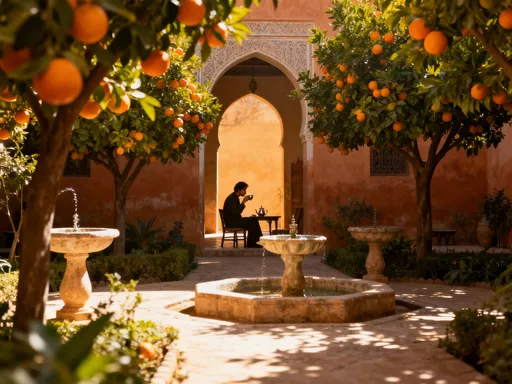
Hidden behind high walls near the Kasbah des Oudaias, the Andalusian Gardens offer one of Rabat’s most tranquil retreats. Designed in the 1920s by French landscape architect Jean-Claude Nicolas Forestier, these gardens were inspired by the lush courtyards of southern Spain, blending Moorish design with Mediterranean flora. Stepping through the entrance feels like entering another world—one of hushed stillness, where the only sounds are the trickle of fountains, the rustle of palm fronds, and the occasional chirp of birds. This is not a place for hurried sightseeing, but for pausing, breathing, and letting the mind settle.
The garden’s layout follows traditional Andalusian principles: symmetrical pathways divide flowerbeds filled with jasmine, bougainvillea, and citrus trees. At its center, a long reflecting pool mirrors the sky and surrounding greenery, creating a sense of harmony and balance. Shaded walkways, supported by red-tiled arches, invite slow strolls or quiet contemplation on stone benches. The scent of orange blossoms lingers in the air, especially in spring, adding to the sensory calm. Unlike the more crowded gardens in Marrakech or Fes, this space remains peaceful, often shared only with a few local readers, elderly couples, or mothers watching their children play near the edges.
What makes the Andalusian Gardens particularly special is their role in daily life. They are not a tourist attraction first, but a neighborhood sanctuary. Locals come here to escape the midday heat, read the Quran, or simply sit in silence. This authenticity enhances the experience for visitors, who are not merely observing culture, but participating in it. There are no loud guides, no souvenir stalls, no pressure to move on. Just stillness. For women seeking a moment of personal retreat during travel, this garden offers a rare gift: solitude in plain sight, safety in serenity, and beauty without spectacle.
Boulevard Mohammed Zerktouni: Local Life and Hidden Cafés
If the Andalusian Gardens represent quiet contemplation, Boulevard Mohammed Zerktouni embodies the gentle pulse of everyday Rabat. Located just south of the old medina, this bustling avenue is far from the tourist trail, yet teems with authentic Moroccan life. Here, there are no souvenir shops hawking carpets or tagines to passing visitors. Instead, the street is lined with family-run businesses, modest cafés, and small bookstalls that cater to residents. It is a place where time slows not by design, but by habit—a natural rhythm shaped by tea, conversation, and community.
One of the boulevard’s quiet treasures is its collection of unassuming cafés. These are not Instagrammable spaces with curated décor, but simple, welcoming spots where men and women gather over glasses of sweet mint tea or steaming coffee. Some have plastic chairs lined up on the sidewalk; others offer shaded terraces with views of passing life. In the late afternoon, it’s common to see groups of friends playing backgammon, students reviewing notes, or elders discussing the day’s news. The atmosphere is relaxed, unhurried, and deeply social. For a traveler, sitting here—even in silence—offers a window into the warmth of Moroccan hospitality.
Alongside the cafés, small bookshops and stationery stores add to the boulevard’s charm. Some display vintage French and Arabic novels, while others sell hand-bound notebooks and calligraphy sets. These shops reflect Rabat’s reputation as a city of learning and literacy, home to several universities and research institutions. For visitors who enjoy browsing without buying, these spaces offer a quiet kind of pleasure—the joy of discovery without commerce. The entire stretch of the boulevard invites walking, not rushing. It’s a place to observe, to listen, and to feel the texture of urban life as it truly unfolds.
The Corniche: Where the Atlantic Meets Laid-Back Vibe
Stretching along the Atlantic coast, Rabat’s Corniche offers a refreshing contrast to the inland heat and bustle. Unlike the packed beaches of Agadir or the rocky cliffs of Essaouira, this shoreline is understated and accessible. Long stretches of sand and pebbles run parallel to a wide promenade, where locals jog, cycle, or walk their dogs. The sea breeze carries a salty freshness, and the horizon stretches endlessly, meeting the sky in soft hues of blue and gold. This is not a place for swimming or sunbathing in crowds, but for walking, breathing, and watching the waves roll in with quiet consistency.
One of the most peaceful sections lies near the mouth of the Bouregreg River, where the ocean meets the estuary. Here, the sound of the waves blends with the cries of seagulls, and the air feels cooler, cleaner. Families often gather on weekends, spreading out blankets and sharing simple picnics of bread, olives, and fruit. Children fly kites or chase foam as the tide rolls in. There are no loud music speakers or beach vendors shouting deals—just the natural rhythm of the coast. For women traveling with children or seeking a safe, open space to unwind, the Corniche provides both freedom and calm.
Among the quiet corners of the Corniche is a lesser-known gem: a small cultural café often referred to by locals as Rick’s Café. Despite the name, this is not a themed tourist spot, but a modest, artist-run space with wooden tables, bookshelves, and a menu of herbal teas and light snacks. It sits slightly off the main path, tucked between dunes and palm trees, and hosts occasional poetry readings or acoustic music nights. The owners, a couple of Rabat-born educators, opened it to create a space for creative exchange. It’s exactly the kind of place that embodies Rabat’s quiet charm—unadvertised, unpretentious, and deeply human.
Kasbah des Oudaias: Beyond the Blue Gates
The Kasbah des Oudaias is one of Rabat’s most photographed sites, famous for its blue-painted doorways and whitewashed walls that glow in the Mediterranean light. Yet, most visitors never venture far beyond the entrance. They snap a few photos, buy a cone of honey-drenched sellou from a street vendor, and move on. But for those willing to explore further, the kasbah reveals a quieter, more intimate side—a maze of narrow alleys, hidden courtyards, and breathtaking viewpoints that few tourists see.
Originally built in the 12th century as a fortress, the kasbah sits on a cliff overlooking the Bouregreg River and the Atlantic Ocean. Its strategic location once made it a military stronghold, but today it is a peaceful residential neighborhood. As you walk deeper into its winding streets, the noise of the city fades. The only sounds are footsteps on stone, the distant call to prayer, and the occasional laugh from a child playing behind a latticed window. The architecture is a blend of Andalusian and Moroccan styles, with intricate tilework, carved cedar doors, and small fountains tucked into corners.
One of the most rewarding discoveries is a small tea house perched at the southern edge of the kasbah. Run by an elderly couple, it offers mint tea served in delicate glasses, accompanied by almond cookies baked fresh each morning. The terrace overlooks the river, with views stretching toward Salé. It’s a perfect spot to sit in silence, watch the light change, and reflect. There are no menus, no prices listed—just a nod and a smile when you’re ready to leave. This kind of quiet generosity is rare, and it speaks to the heart of Moroccan hospitality. The kasbah, when experienced beyond its postcard image, becomes not just a destination, but a moment of connection.
Petit Socco & Local Art Hubs: Culture Without the Crowds
While the main souks of Rabat can feel overwhelming with their narrow lanes and persistent vendors, a quieter cultural scene is emerging in the city’s lesser-known corners. One such place is Petit Socco, a small square tucked between residential streets near the old medina. Unlike its namesake in Tangier, this Petit Socco is not a tourist hub, but a local gathering spot where artists, students, and young entrepreneurs meet to share ideas. Here, small galleries and craft workshops have begun to appear, transforming old houses into creative spaces that celebrate both tradition and innovation.
One standout is an artist-run café called Dar Chafaa, housed in a restored 19th-century home. The space features rotating exhibitions of contemporary Moroccan art, from calligraphy-inspired paintings to textile installations. Visitors can sip herbal tea in a sunlit courtyard while listening to live oud music or attending a poetry reading in Arabic and French. The owners, a pair of sisters trained in fine arts, started the project to support local talent and create a safe, inclusive environment for cultural exchange. For women interested in art, storytelling, or community-driven initiatives, places like this offer meaningful engagement beyond the surface level of tourism.
Other emerging spaces include ceramic studios where visitors can try their hand at traditional zellige tile-making, and small boutiques selling handwoven baskets, natural soaps, and embroidered linens made by women’s cooperatives. These venues are not designed for mass consumption, but for connection. They invite slow looking, thoughtful conversation, and appreciation for the skill behind each craft. In a world where souvenirs often feel generic, these art hubs offer authenticity—objects and experiences rooted in place, people, and purpose. They reflect a growing movement in Rabat: one that values culture not as a commodity, but as a living, evolving practice.
Putting It All Together: Designing Your Own Leisure Journey
Exploring Rabat’s hidden spots is not about following a strict itinerary, but about cultivating a mindset of openness and presence. The city rewards those who wander without urgency, who sit without checking the time, and who listen more than they speak. To design a meaningful leisure journey through Rabat, start by letting go of the need to see everything. Instead, focus on experiencing a few places deeply. Begin your morning at the Andalusian Gardens, allowing the stillness to set the tone for the day. From there, walk toward Boulevard Mohammed Zerktouni, stopping at a local café for tea and conversation.
In the afternoon, head to the Corniche, where a long walk along the water can clear the mind and lift the spirit. If time allows, visit the kasbah in the late hours, when the light is soft and the crowds have thinned. Save Petit Socco and the art hubs for an evening visit, when the city comes alive with quiet creativity. Traveling on foot is ideal, as most of these locations are within a 30-minute walk of each other. When needed, petit taxis are affordable and safe, especially for women traveling alone. Just ensure the meter is running or agree on a fair price before departure.
The key to enjoying Rabat is embracing the concept of *leisure with purpose*. This is not passive idleness, but intentional rest—choosing to move slowly, to observe, and to connect. It means saying yes to unplanned moments: a shared smile with a local, an invitation to taste homemade bread, or the decision to sit and watch the sunset instead of rushing to the next site. These pauses are not wasted time; they are the essence of travel. For women who often carry the weight of planning and caregiving, Rabat offers a rare permission: to slow down, to breathe, and to simply be.
As tourism continues to grow in Morocco, cities like Marrakech and Fes face increasing pressure from overcrowding and commercialization. In this context, Rabat stands as a quiet alternative—a capital that has not sacrificed its soul for visibility. Its hidden spots are not secrets to be hoarded, but invitations to a different way of traveling. They remind us that the most memorable journeys are not always the loudest or the most photographed, but the ones that allow space for reflection, connection, and peace.
Rabat’s charm lies in its quiet confidence. These hidden leisure venues aren’t just places—they’re invitations to slow down, listen, and reconnect. In a world of over-tourism, discovering calm becomes the ultimate travel luxury. Maybe the best journeys aren’t the loud ones, but the ones that let you breathe.